May has brought the gardens to life in full colour, with warm, dry weather encouraging an early and particularly vibrant display across many areas. From cascading climbers to bold structural blooms, there is something to discover around every corner, and now is one of the best times to explore the gardens at their seasonal peak.
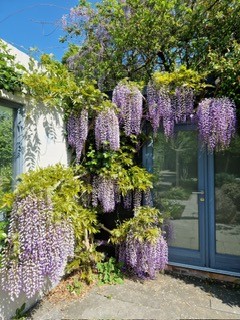
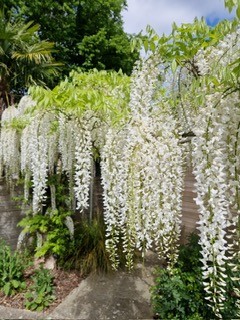
Wisteria (Wisteria sinensis / Wisteria floribunda) is truly the star of the show this month, now in full bloom but only for a short window. Its cascading purple flowers can be found in Johnsons Gardens, by the Historical Gardens, and inside the Walled Garden, while a striking white variety blooms beautifully in the Secured By Design garden. These elegant, hanging racemes create a dramatic visual display and fill the air with a soft fragrance. Did you know wisteria can live for over 100 years when well cared for? From an educational perspective, wisteria is a vigorous climber that requires strong structural support and regular pruning to encourage flowering, typically blooming best on older wood.
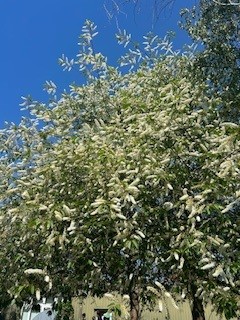
The bird cherry tree (Prunus padus) is also looking exceptional by the café, drawing visitors in with its powerful scent -you’ll often smell it before you see it. Covered in delicate white blossoms, this tree is a subtle yet impactful addition to the landscape. Interestingly, bird cherry has historically been used in traditional remedies and even flavourings in parts of Europe. Botanically, it is part of the rose family and is particularly valuable for wildlife, providing an early source of nectar for pollinators.
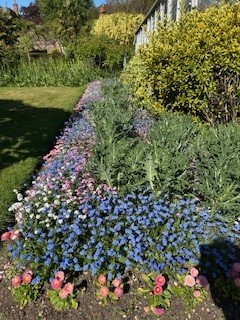
Flower bedding throughout the gardens is especially colourful this month, with standout displays in the Fothergills Garden and the raised bed. These seasonal plantings create bold, coordinated bursts of colour that change throughout the year. Bedding plants are often chosen for their long flowering periods and visual impact. A useful insight is that these plants are typically grown as annuals, meaning they complete their lifecycle in one season, allowing gardeners to refresh displays regularly for continuous colour.
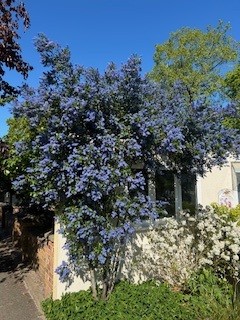
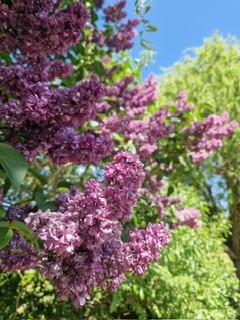
Our lilacs are now in bloom and looking spectacular, with both American lilac (Ceanothus spp.) and the classic English lilac (Syringa vulgaris) flowering in rich purple and blue tones. These can be found growing close together along the National Garden Centre (NGC), offering a beautiful comparison between the two. While they share a name, they are not closely related. Ceanothus is actually an evergreen shrub, whereas Syringa is deciduous. Lilacs are well known for their strong fragrance, and educationally, they thrive best in well-drained soil and full sun, producing their best blooms after a period of winter chill.
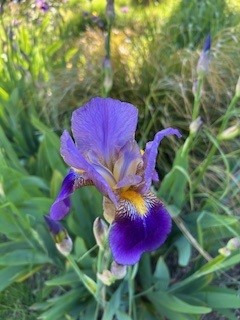
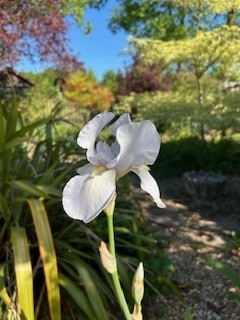
Irises (Iris germanica and related hybrids) are also blooming across the gardens, with elegant white varieties in the Low Allergen Garden and striking purple ones in the bedding outside the Manor House. Their intricate, almost architectural flowers make them a favourite at this time of year. The name “iris” comes from the Greek word for rainbow, reflecting the wide range of colours they come in. From a horticultural standpoint, irises grow from rhizomes that are underground stems that store nutrients and allow the plant to return year after year.
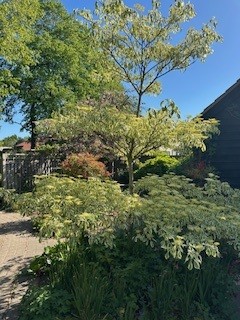
A special mention goes to our very own wedding cake tree (Cornus controversa), located in the Low Allergen Garden. It earns its charming name from its distinctive tiered, horizontal branching structure, which resembles the layers of a wedding cake. This tree creates a striking silhouette in the landscape. Interestingly, its flat clusters of small white flowers attract a variety of pollinators. From an educational perspective, Cornus controversa is best appreciated for its structural form, making it a popular choice in ornamental planting design.
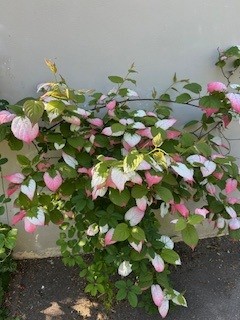
The actinidia leaves (Actinidia kolomikta) are another highlight this month, found along the wall of the Exaggerated Beauty Garden. For most of the year, the leaves appear green, but for a short period in late spring, they transform into a stunning blend of pink, white, and green. This dramatic colour change is a natural adaptation thought to help attract pollinators. Botanically, Actinidia is related to the kiwi fruit plant, and this particular species is prized more for its foliage than its fruit.
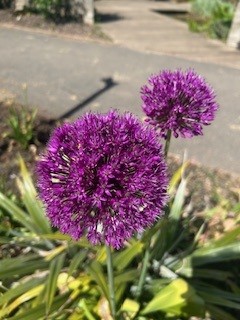
Alliums (Allium giganteum and other ornamental varieties) are standing tall throughout the gardens this month, with especially impressive displays inside the Walled Garden. Their bold, spherical flower heads add height and structure to planting schemes. Did you know alliums are part of the same family as onions and garlic? These plants are particularly beneficial in the garden as they can help deter pests while also attracting pollinators such as bees.
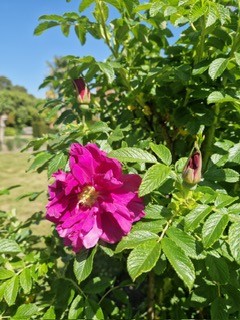
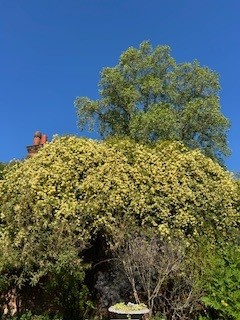
Finally, roses (Rosa spp.) are blooming earlier than usual this year due to the warm and dry conditions. Visitors can enjoy white, red, and pink varieties, predominantly in the Walled Garden and along the walls of the Saddlery Workshop area. A standout feature within the Walled Garden is Rosa banksiae, a vigorous climbing rose that has taken over an entire section of wall, creating a stunning cascade of delicate flowers. Unlike many traditional roses, Rosa banksiae is almost thornless, making it particularly well-suited for training along structures. Did you know it is one of the earliest flowering roses in the season? climbing roses like this require strong support and benefit from careful pruning to control their spread and encourage healthy flowering year after year.
With so much in bloom and looking its best, May is the perfect time to explore the gardens and take in the colours, scents, and seasonal highlights before they begin to fade.